

As electric vehicles (EVs) become increasingly popular in the UK, more homeowners are considering installing home EV chargers. Having a home charging point offers convenience, cost savings and energy efficiency, allowing you to charge your vehicle overnight and avoid relying on public charging points. However, installing a home EV charger is not as simple as plugging in an appliance. It requires expertise, compliance with regulations, and a solid understanding of electrical systems. That’s why it’s important to have a specialist install your home EV charger.
Why Professional Installation is Essential
Electrical Safety & Compliance
EV chargers operate at high power levels, which means improper installation can lead to electrical faults, fire risks, or damage to your home’s electrical system. A professional electrician ensures your charger is installed safely and in full compliance with UK electrical regulations, including:
- Part P of the Building Regulations – governing electrical safety in domestic properties.
- BS 7671 (IET Wiring Regulations) – covering the installation and maintenance of electrical systems, including the specific requirements for EV charging equipment.
- OZEV grant requirements – if you’re eligible for financial support, the work must be carried out by an OZEV authorised installer using an approved charge point.


Assessing Your Home’s Electrical Capacity
Before installation, an experienced electrician will assess your home’s electrical supply to determine whether it can handle the additional load of an EV charger. Some homes may require a dedicated circuit for the charger, and in certain cases an upgrade to the consumer unit (fuse box) might be necessary to prevent overloading the system.
Earthing & Residual Current Protection
Proper earthing is essential to prevent electrical shocks and ensure the charger is safe to use in all weather conditions. Many UK homes use a PME (protective multiple earthing) supply, which needs particular care with outdoor charge points, so your installer will either fit an earth rod or use a charger with built-in PEN fault protection.
An RCD (Residual Current Device) must also be installed to cut off the power in the event of a fault, protecting both your home and your vehicle
Notification to the Distribution Network Operator (DNO)
Your installer will also deal with the Distribution Network Operator (DNO), the company responsible for the local electricity network. For most standard 7kW home chargers, the DNO can be notified after the work is done. Larger installations, or homes where the existing supply is already heavily loaded, may need approval before the charger can be fitted.
Either way, it’s the installer’s job to handle this, and it ensures the network can cope with the extra demand.
Smart Charger Setup & Integration
All new home EV chargers sold in Great Britain must be smart chargers by law, so features such as energy monitoring, remote access and scheduling are standard rather than optional. That means you can set your car to charge overnight on a cheaper off-peak tariff, and see exactly what each charge costs you.
A professional installer will configure these settings and connect the charger to your home network and app, so it’s working properly before they leave.
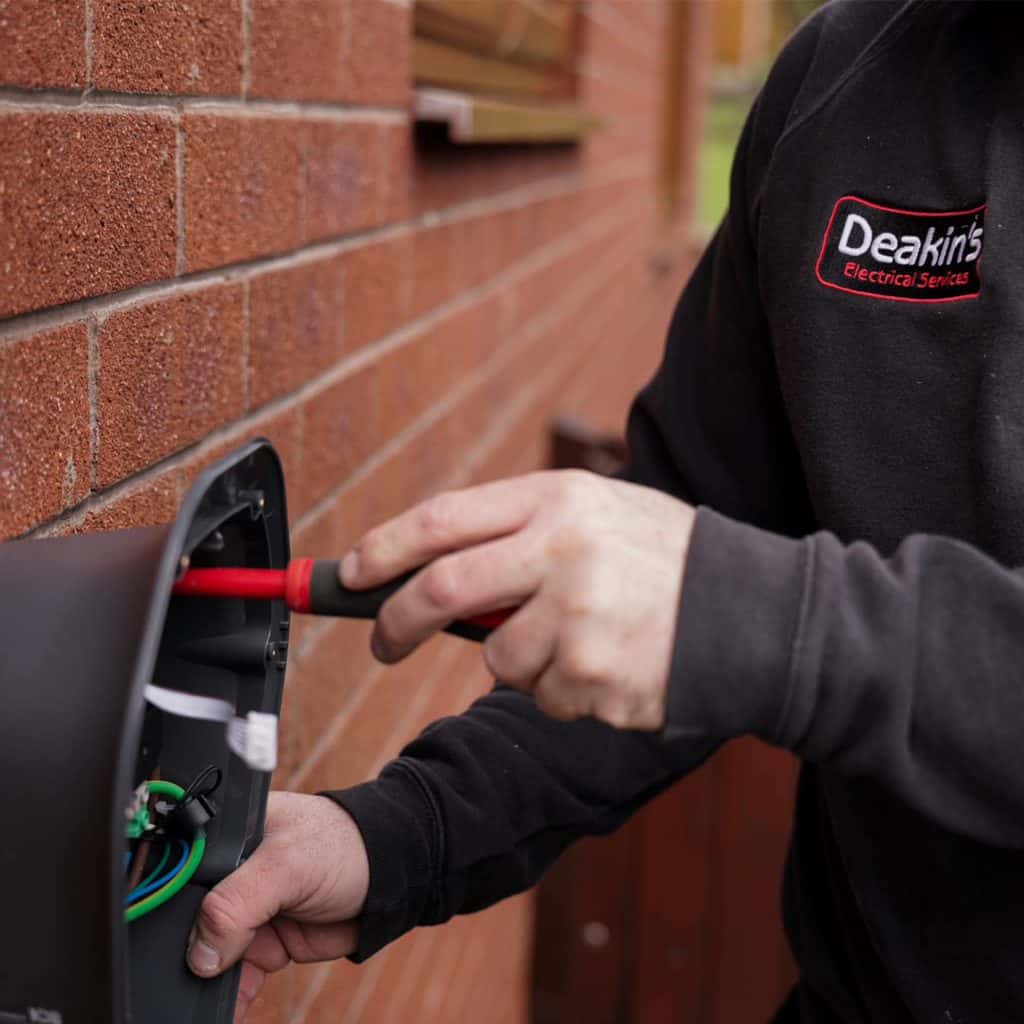
Can You Install a Home EV Charger Yourself?
In short, no. Installing an EV charger is notifiable work under Part P of the Building Regulations, so it has to be carried out or certified by a qualified electrician registered with a competent person scheme such as NICEIC. Beyond the legal position, there are good practical reasons not to attempt it:
- Incorrect installation can be dangerous and may invalidate your home insurance.
- Most manufacturers require professional installation to maintain the warranty on the charger.
- Building control would need to be notified separately, which usually costs more than having a registered electrician do the work in the first place.
- To qualify for the EV Chargepoint Grant, the work must be carried out by an OZEV authorised installer.
For more on this, read our guide on whether you can install an EV charger yourself.
Who Should Install Your Home EV Charger?
When choosing an installer, look for:
- A registered electrician – NICEIC or NAPIT registration means their work is regularly assessed and certified to UK standards.
- OZEV authorised status, if you’re applying for a grant. Without it, the grant can’t be claimed, whatever else the installer is qualified to do.
- Real experience with EV chargers – familiarity with different charger models, DNO notification and the earthing arrangements that outdoor charge points need.
- A clear, written quote covering the charger, the cable run and any consumer unit work, so there are no surprises once the job starts.

Why Choose Deakin’s Electrical Services?
Our Installation Process
- Consultation & site survey – we assess your property, electrical supply and specific requirements to recommend the best charger.
- Professional installation – our team handles everything from running high-quality cabling to ensuring all safety regulations are met.
- Testing & certification – we carry out thorough safety checks and provide certification for compliance with UK regulations.
- Post-installation support – we show you how to use your charger and its app, and we’re on the end of the phone if you have questions afterwards.
Get in Touch
If you’re considering installing a home EV charger, trust Deakin’s Electrical Services for a safe and professional installation. Chargers are fully installed from £795 including VAT.
See our home EV charging service for full details, call us on 01772 426 065, or contact us for a free, no-obligation quote.