
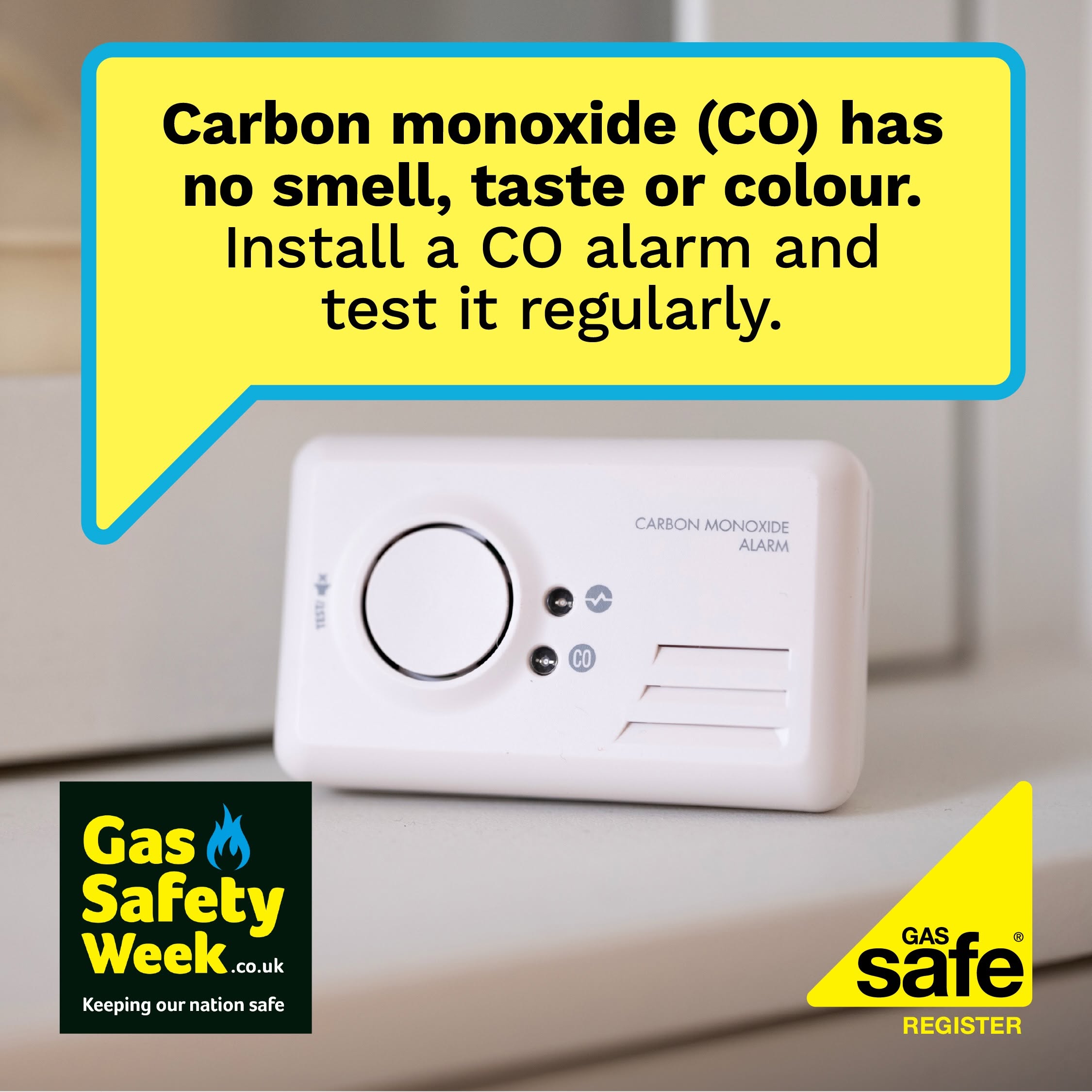
As the weather turns colder and heating systems come back on after the summer, it’s a good time to think about carbon monoxide. It’s a gas you can’t see, smell or taste, and it’s one of the most serious risks associated with faulty boilers and gas appliances.
Following Gas Safety Week, here’s what every homeowner and landlord should know: the warning signs, what to do if you suspect a problem, and the simple steps that keep your home safe.
What Is Carbon Monoxide?
Carbon monoxide (CO) is produced when fuels such as gas, oil, coal or wood don’t burn completely. A boiler, gas fire or cooker that’s working properly produces very little of it, and what it does produce is carried safely out of your home through a flue or chimney.
Problems start when an appliance is faulty, badly installed, poorly maintained, or when a flue or vent becomes blocked. Carbon monoxide can then build up inside your home, and because it has no colour, smell or taste, you won’t know it’s there.
Symptoms of Carbon Monoxide Poisoning
The early symptoms are easy to mistake for flu, a cold or food poisoning. According to the NHS, the most common are:
- A tension-type headache
- Dizziness
- Feeling sick or being sick
- Tiredness and confusion
- Stomach pain
- Shortness of breath and difficulty breathing
A few patterns can suggest carbon monoxide rather than an ordinary illness:
- Symptoms ease when you leave the house and return when you come back
- Other people in the household, or pets, are unwell at the same time
- Symptoms appear or get worse when the heating or a gas appliance is on
Warning Signs on Your Appliances
Your boiler, gas fire or cooker can also give clues that something isn’t right. Look out for:
- A lazy yellow or orange flame instead of a crisp blue one on gas hobs and fires
- Black, sooty marks or staining on or around the appliance
- A pilot light that keeps going out
- More condensation than usual on the windows in the room where the appliance is
If you notice any of these, stop using the appliance and have it checked by a Gas Safe registered engineer.
What to Do If You Suspect Carbon Monoxide
If you think carbon monoxide could be present, act straight away:
- Turn off gas appliances if it’s safe to do so
- Open doors and windows to let fresh air in
- Get everyone, including pets, out of the property
- Call the National Gas Emergency Service on 0800 111 999
- Seek medical advice. Call NHS 111, or 999 if someone is seriously unwell
Don’t go back inside until you’ve been told it’s safe, and don’t use the appliance again until it’s been inspected and repaired.
The same number applies if you ever smell gas. Call 0800 111 999 immediately. It’s free and available 24 hours a day.
Why a Carbon Monoxide Alarm Matters
Because you can’t detect carbon monoxide yourself, an audible CO alarm is one of the simplest and most effective ways to protect your household. Fit one in every room with a fuel-burning appliance, such as a boiler, gas fire or wood burner, and test it regularly.
When buying an alarm, check that it meets British Standard BS EN 50291. Don’t rely on the older “black spot” detectors, which change colour but don’t make a sound, so they won’t wake you if levels rise at night.
If You’re a Landlord
In England, landlords must fit a carbon monoxide alarm in any room used as living accommodation that contains a fixed combustion appliance, such as a boiler, excluding gas cookers. Landlords are also legally required to arrange an annual gas safety check on every gas appliance and flue, carried out by a Gas Safe registered engineer.
Why Gas Work Should Never Be DIY
It’s tempting to try to fix a small problem yourself, but gas work is one job you should never attempt. Unsafe gas work can lead to gas leaks, fires, explosions and carbon monoxide poisoning.
By law, anyone working on gas appliances in the UK must be on the Gas Safe Register. Every registered engineer carries a Gas Safe ID card, and it’s always worth asking to see it. The card shows which types of gas work the engineer is qualified to carry out.
Prevention: The Annual Boiler Service
The best way to reduce the risk of carbon monoxide is to have your boiler and gas appliances checked every year. During an annual boiler service, a Gas Safe engineer checks that the boiler is burning fuel correctly, that the flue is clear and sealed, and that everything is operating safely.
Autumn is an ideal time to book, before the heating is working its hardest through winter. If your boiler is older and needs frequent repairs, it may also be worth considering whether a replacement would be the safer long-term option.
Book a Gas Safe Engineer
Deakin’s has been keeping homes across Preston, Chorley and the North West safe and warm for over 30 years. All our gas work is carried out by Gas Safe registered engineers, whether it’s a boiler service, a repair, or a landlord gas safety check.
Call us on 01772 426 065 or get in touch to book. We’re open Monday to Friday, 8am to 5pm. For gas emergencies outside those hours, always call the National Gas Emergency Service on 0800 111 999.